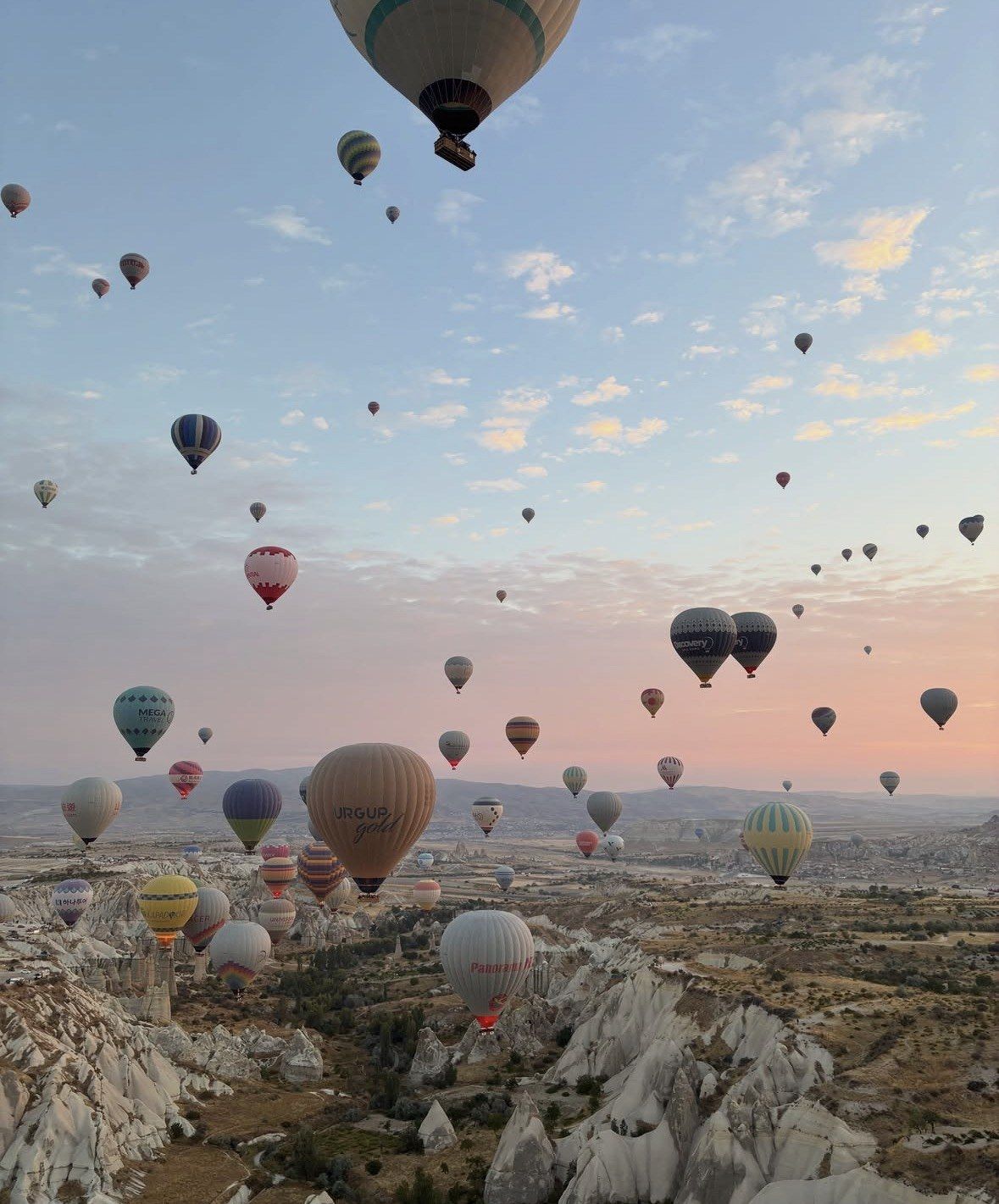
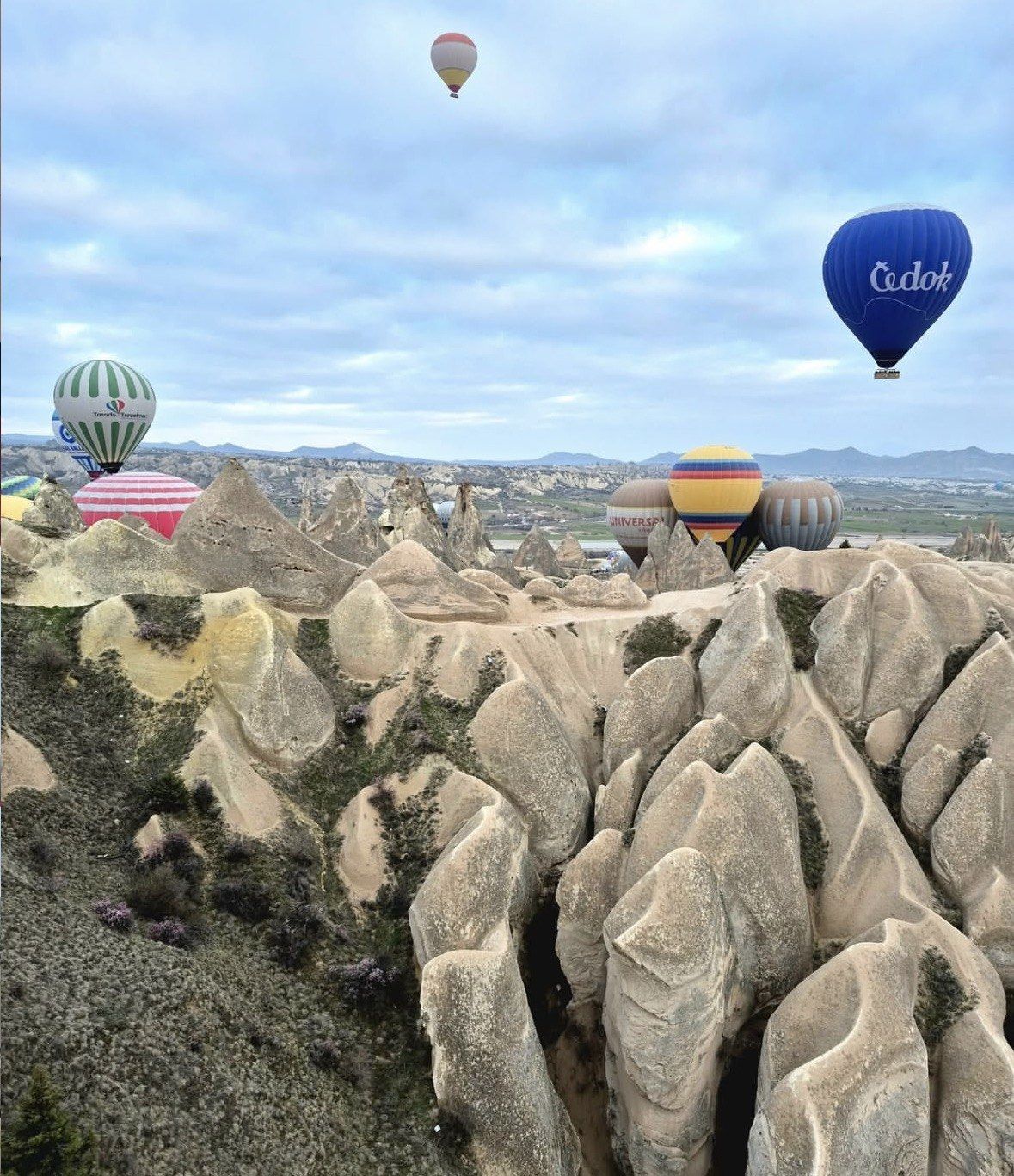
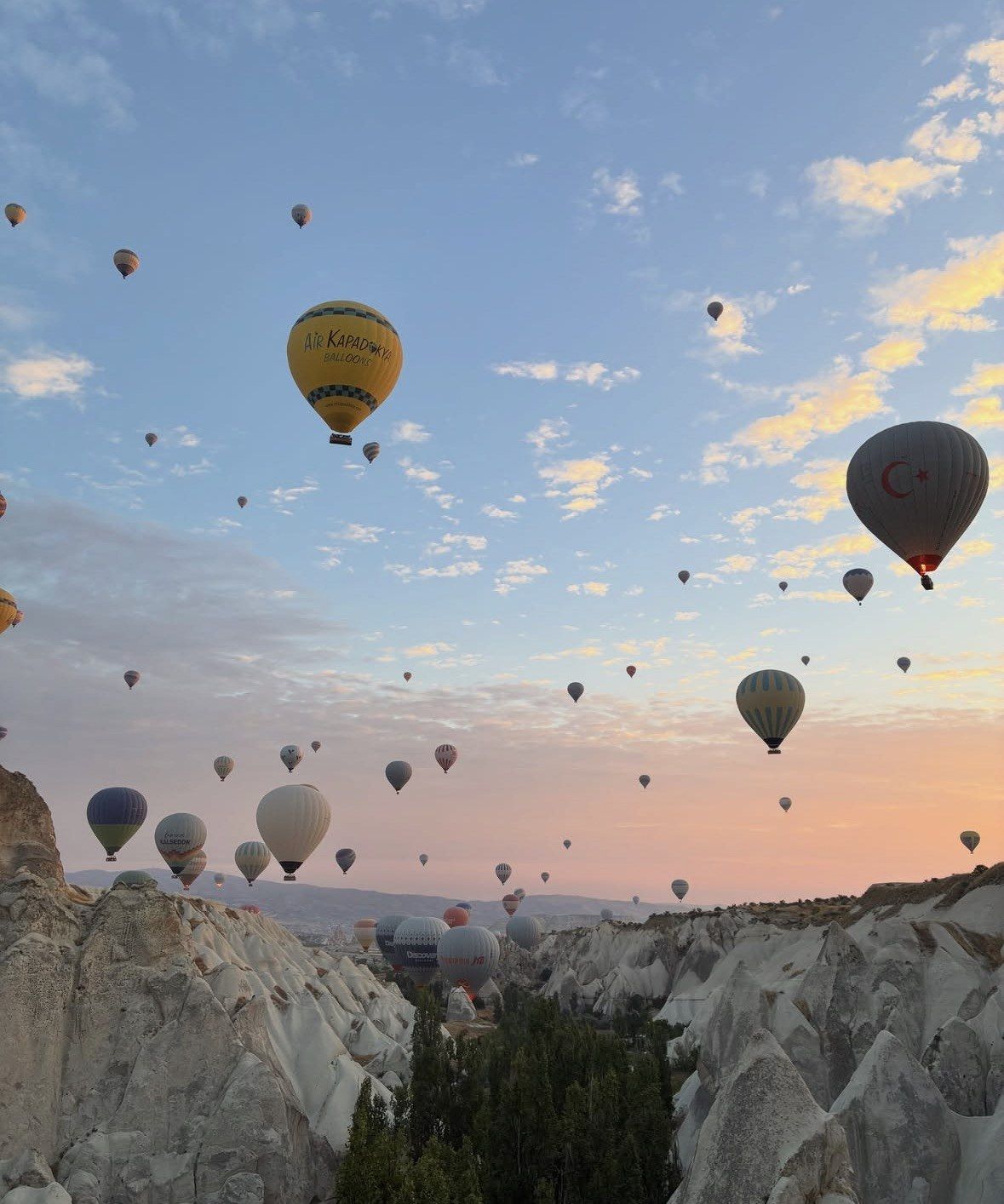
In shortHot air balloons in Cappadocia fly inside a formal oversight framework. The national civil aviation authority SHGM sets the flight periods and the traffic limits, Kapadokya Alan Başkanlığı administers the area, and three accredited organisations at Kapadokya University handle slot allocation, pilot training approval and airworthiness. Thirty companies, 367 balloons and 585 licensed pilots make up the regional base, and no commercial flight departs above 10 knots of wind.
585licensed balloon pilots
367balloons in the region
10 knotswind ceiling for flights
223 daysflyable in 2025
Are hot air balloons in Cappadocia safe: the bodies that oversee the flights
Three layers of oversight stand between a ticket and a basket. SHGM, the national Directorate General of Civil Aviation, sets the flight periods and caps how much commercial traffic may be airborne at once: on its own published release, a maximum of 100 balloons in the first morning wave, 50 in the second and up to 50 more in the afternoon period. The site itself is legally administered by Kapadokya Alan Başkanlığı, a Ministry of Culture and Tourism body based in Nevşehir, which is responsible for protection, planning, management, promotion and inspection across the area.
The technical work sits with three accredited organisations housed at Kapadokya University's hot-air-balloon research centre. One runs slot allocation for the flight area, one approves pilot training, one manages airworthiness. Your pilot's licence and the maintenance status of the balloon you climb into are both signed off through that accredited route, well before the morning starts.
The licensed base behind all of this is substantial. Across the region 585 pilots hold balloon licences and 367 balloons are in service with 30 firms, and SHGM's own figures track the growth: 25 authorised companies with 239 balloons at its 2018 count, up from 10 operators and 67 balloons a decade earlier. Nationally the government cites 67 licensed companies, 434 balloons and 682 pilots, and roughly 80 percent of all hot-air balloon excursions in Türkiye take place over these valleys, which is why the regulation is written around this one flight area.
The limits that keep every flight conservative
Two numbers decide whether the balloons leave the ground. The official meteorological assessment of the Cappadocia flight area fixes 10 knots as the maximum wind speed for commercial passenger flights, so a dry, bright morning with 12 knots across the field produces no departures at all. Elevation sets the second limit: the flight area lies at 1,224 m above sea level, which holds the workable air temperature for a loaded passenger basket to about 15°C.
Clearance is issued window by window, and never for the region as a whole. The Slot Hizmet Merkezi grades the designated LTB1 (Kapadokya) area piece by piece, flagging Sectors A, B and C and secondary Regions 1 to 5 one by one, while the authorised area at Nevşehir Çat receives a determination of its own. A red flag means conditions have been judged unsuitable for one specific dated window, published with its hours attached, for example 17.10.2026, 03:20-15:05. Under red or yellow no departure clearance exists for commercial flights; only instructor-led training flights may proceed, and only after contacting SHGM officials. Each sector can carry a different flag on the same date, so a no-fly decision over one part of the area does not necessarily cover the rest.
A green flag is clearance to go, and the final call to launch still rests with the pilot and the operator rather than with the authority. That is why an inflated balloon can be stood down on the field with passengers already standing beside it. The annual count shows what all these filters produce: balloons went up on 223 dates in 2025, leaving roughly 140 mornings with no commercial flying, and the official assessment singles out March and April as the windiest months and the weakest for reliable take-off clearance.
Once the whole party clears the rules: 3.5 hours, from $126
With every traveller through the age, standing and health conditions, this is the version to take. The 3.5 hours cover the hotel pickup and drop-off, the air-conditioned minivan, a snack breakfast at the field, commentary from the pilot in the air, then the champagne ceremony and a flight medal at the end. Rated 5.0 ★ (8535 reviews).
★ 5.0/5 · 8,535 reviews
Why Cappadocia flies at dawn and barely at any other hour
Departures are confined to a morning period that opens 30 minutes before sunrise and closes at 11:00. A second window runs from 14:00 until 30 minutes after sunset in suitable weather, allotted 65 balloons against the morning's 104 primary and 52 secondary places.
The ground heats through the day, thermals build and the air climbs past what a loaded basket can work with, which is why afternoon flying is restricted rather than simply unpopular. The capacity figures show how narrow the permission really is: in 2019 the afternoon stood open on 28 dates in total, and operators took up only 26 percent of even those slots. In the official assessment the afternoon fails the suitability test in every month except November, December, January and, in part, October.
Decline any afternoon or second-flight offer unless you are in Göreme between November and January with no morning left in your trip. The morning primary period carries the most suitable winds of any period, and government figures count around 150 flights a day at sunrise. Both balloon flights listed here work that window.
Minimum age for hot air balloon Cappadocia, pregnancy and mobility limits
Check every person in your party against the published conditions before you pick a date. The field at 05:00 is not the place to find out that someone cannot board, and the operators' lists overlap closely.
- Minimum age: around 6 at most operators, with one Göreme firm accepting five. Below that a child cannot see out over the basket wall and struggles with the landing position.
- Height: roughly 1.20 to 1.40 m is the usual test, so a child's eyes clear the rim of the basket.
- Standing and boarding: you must be able to stand in the basket for the entire flight and climb in and out unaided.
- Landing position: you must be able to hold it for about five minutes; one operator's conditions compare it to sitting on a horse.
- Pregnancy: the published conditions keep pregnant passengers on the ground, and extend that to anyone who thinks she may be pregnant. Thresholds differ, from more than two months at one operator to no stage of pregnancy at all at another, because a landing can involve sudden movement or impact.
- Recent surgery and bones: listed exclusions include recent surgery, severe hip or back pain, fragile bones, use of crutches and a cast on a broken bone.
- Judgement: conditions affecting judgement are listed as exclusions too, since you have to understand and follow the safety instructions.
- Weight: no fixed per-passenger limit is published. The balloon, basket and total load set the figure, and accurate weights are required for the flight manifest.
The briefing, the basket and what to wear in it
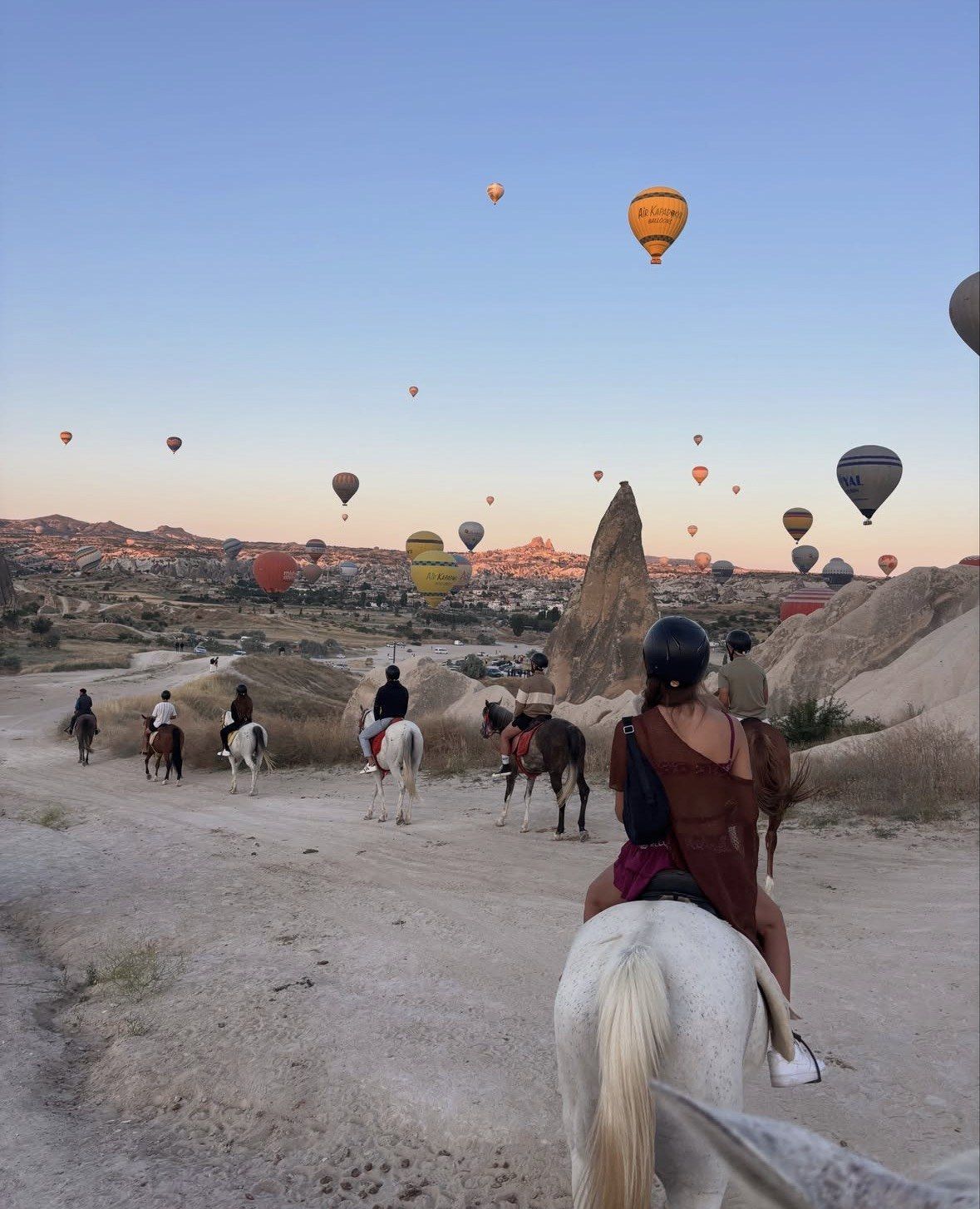
The pre-flight briefing happens at the launch field while the envelope is inflating, and it covers the handholds and the landing position you will be asked to take before touchdown. Listen to it instead of filming it; the position is the one instruction you will actually have to perform.
Shoes are part of what the briefing checks. Closed walking or sports shoes, flat-soled and with grip, are what the conditions call for, while sandals, slippers, high heels and anything loose enough to drop over the side are ruled out. Everyday clothes in layers work year round. Taller passengers are advised to wear a hat because of the radiant heat coming off the burners above the basket.
Mobility conditions follow the shape of the basket. There is no seat, no ground-level door and no sitting down during a landing, so anyone who cannot stand for 60 to 90 minutes or climb over a wall tall enough to block a 1.20 m child's view will not be accepted. Altitude plays almost no part in any of it: the basket works a band that begins at tree level and reaches about 900 metres above the ground, with most of the time in the air spent between 300 and 1,000 metres.
Confirm everyone can fly, then book the morning
Work through the eligibility list for every traveller, children and grandparents included, then book the date. The flights listed here allow free cancellation up to 24 hours before, so you can hold a morning while you check the details.
Take the first morning of your stay and keep the following ones spare, because only 223 of 365 days produced flying in 2025 and a red flag on your only dawn leaves you nothing. Lead times quoted for the area run to 2 to 4 weeks from April to November, stretch out to months for June, July and August, and shrink to roughly a week once winter arrives.
First trip and one dawn you can afford to spend, take the 3.5-hour classic morning from $126, rated 5.0 ★ (8535 reviews), which handles the pickup, the field and the ceremony afterwards. On a tighter budget, the 3-hour sunrise flight from $90, rated 5.0 ★ (3361 reviews), lifts off in the same window, under the same flag, with the same limits applied to it.
| Tour | Price from | Duration | What is included | Best for |
|---|
| Cappadocia Hot Air Balloon Ride | from $126 | 3.5 hours | Hotel pickup and drop-off, transport by air-conditioned minivan, snack breakfast, live commentary on board, champagne ceremony after the ride, flight medal | The complete classic balloon morning |
|---|
| Cappadocia Sunrise Hot Air Balloon Flight | from $90 | 3 hours | Snacks, air-conditioned vehicle, flight certificate | The sunrise flight at the lowest entry price here |
|---|
Questions people ask
Is there a weight limit for Cappadocia balloon flights?
No per-passenger limit is published. What governs the booking is the load the equipment is rated for: local baskets usually carry a 1,500 to 2,500 kg rating, which comes out at something like 16 to 24 passengers alongside the pilot. Accurate weights are required for the flight manifest, so give yours honestly when you book.
How high do the balloons go?
Not far. A pilot here uses everything between tree level and roughly 900 metres (3,000 feet) above the ground, and the settled part of the flight sits in the 300 to 1,000 metre band. The regulator permits a good deal more, 6,000 feet on weekdays and 8,000 feet at weekends, but a sightseeing flight over these valleys never needs that room. The rock formations are the subject, so climbing higher gains nothing.
How many balloons are in the air at the same time?
About 156 on a busy round. Morning slot capacity for the flight area stands at 104 primary and 52 secondary balloons, raised from an earlier ceiling of 100 airborne at once, while SHGM's release gives a maximum of 100 in the first wave and 50 in the second. Each sector and secondary region inside LTB1 (Kapadokya) gets its own daily fly or no-fly decision.
Where will my balloon land?
Nobody knows in advance. The launch field, the flight direction and the landing area are chosen on the morning itself from the authorised flight area and the wind, and when conditions allow a balloon can come down on the same point it lifted off from. The usual tracks cross Göreme, Love Valley, Rose Valley, Red Valley and Çavuşin, and that is as much as anyone can tell you about the route beforehand.
What should I wear so standing and landing are comfortable?
Layers of everyday clothing and closed shoes with grip. Spring and autumn want trousers, long sleeves and a jacket; summer a light pair of trousers and a sweatshirt; winter a heavy coat, gloves, beanie, scarf, two layers of socks and thermal underwear. Dawn is the coldest hour of the day, with average daily minima at the Nevşehir station of 13.7°C in July, 6.8°C in October and −3.6°C in January.
Read also