Where the rock came from
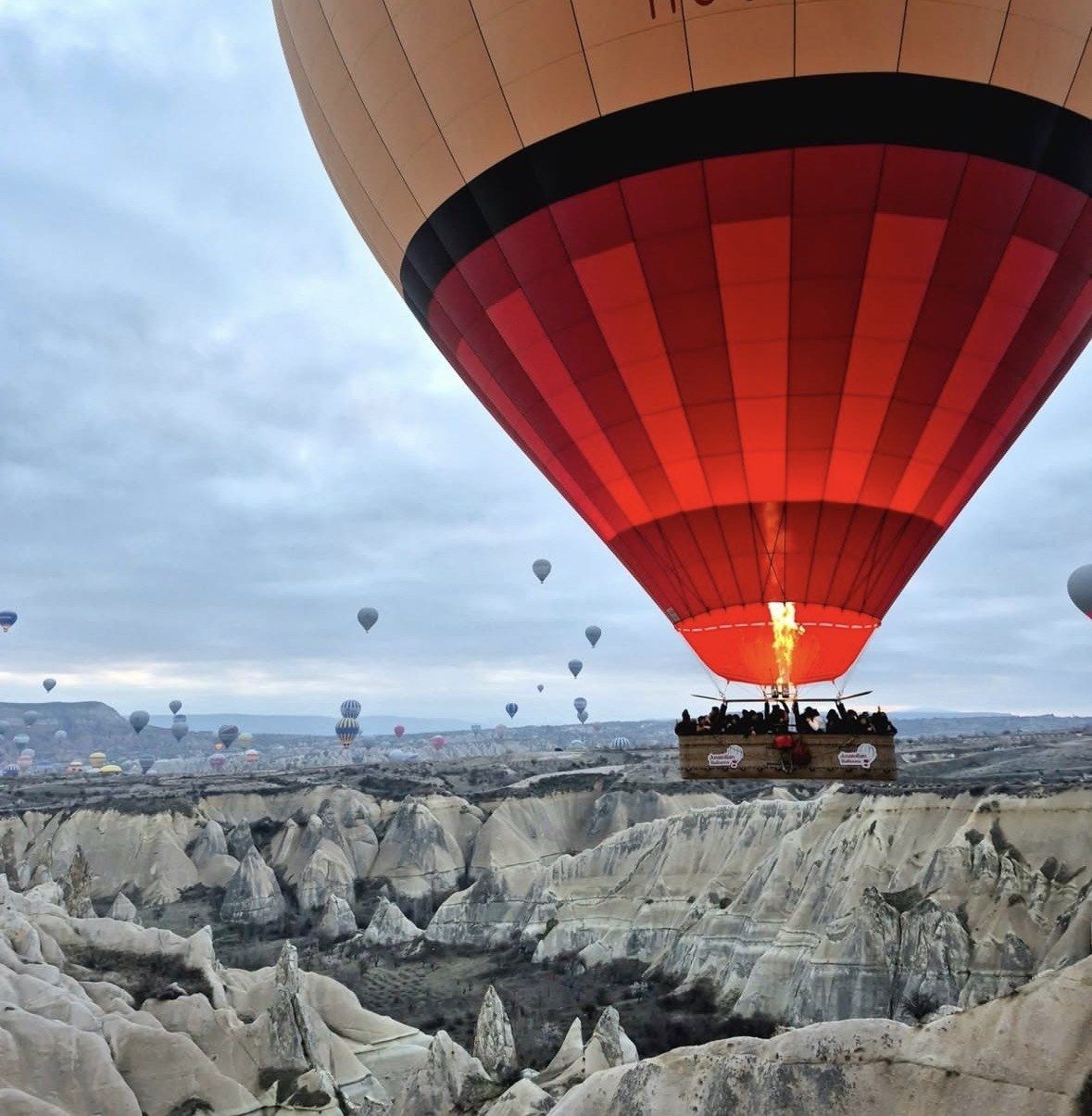
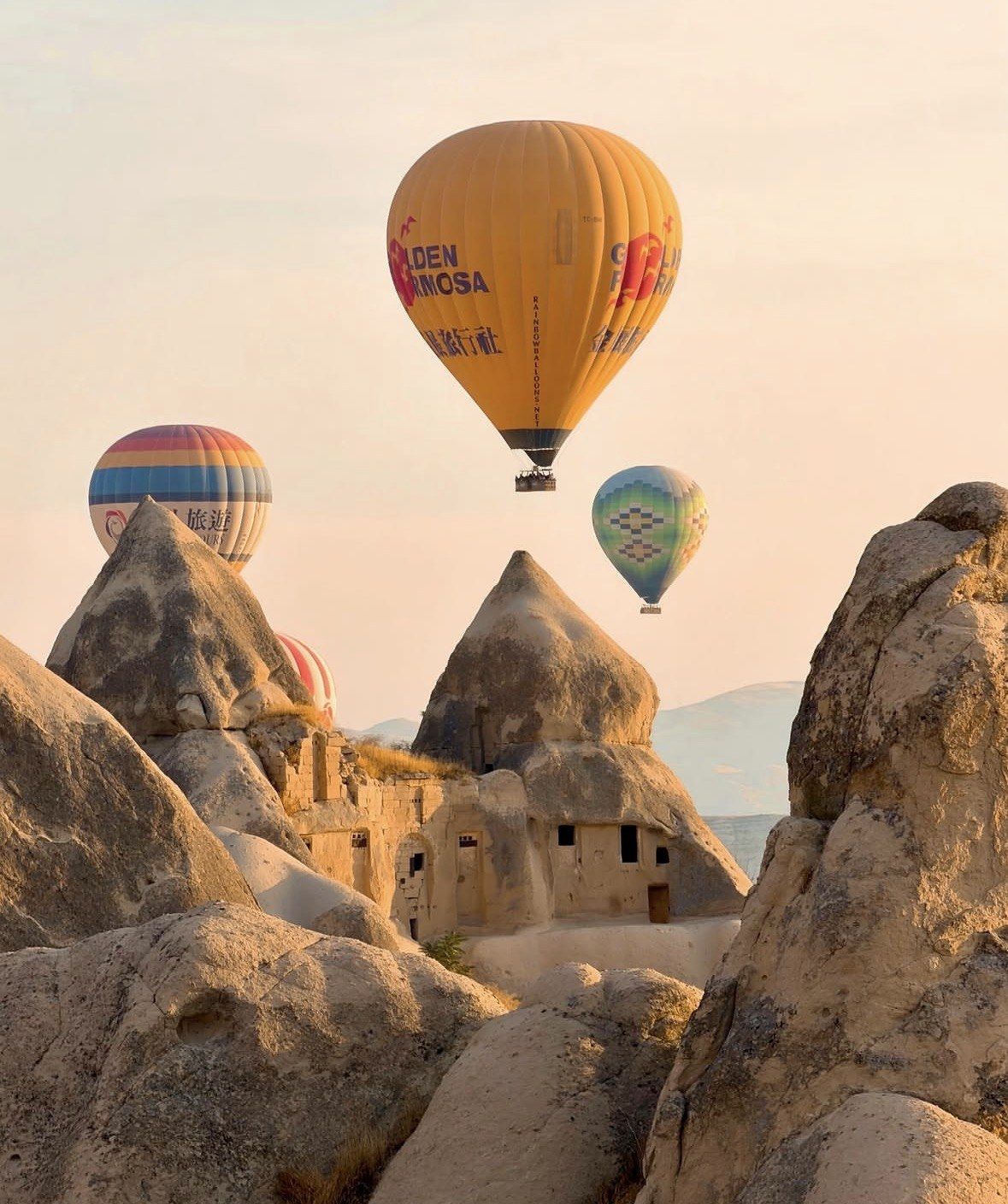
Göreme's own municipality dates the volcanic landscape around the town to roughly 60 million years ago, when Erciyes and Hasan Dağı threw ash and lava across the plateau that now carries the villages of Nevşehir province. The ash settled, compacted and hardened into tuff soft enough to cut with hand tools but firm enough to hold a ceiling. Water and wind did the shaping afterwards, stripping the weaker layers and leaving the cones that everyone calls fairy chimneys. The ground that balloon pilots measure their height from sits at 1,224 m, high enough that the air behaves differently here than at sea level, which later mattered a great deal to the people flying over it.
Carving began in earnest in the 4th century. Between then and the 13th century the chimneys and cliff faces around Göreme were cut into churches, chapels, storerooms and dwellings, and the valley became a monastic centre that stayed in use for roughly nine centuries. The work was practical before it was decorative: a room cut into tuff holds a steady temperature, needs no imported stone and can be extended by cutting deeper into the hill. Painters came later, working directly onto the rock in some chapels and in tempera in others. The official site record for Göreme lists ten monuments inside the enclosure, which tells you how densely one small valley was occupied.
The churches above and the cities below
Göreme's enclosure holds the concentrated version of all this. Ten monuments appear on the Ministry's record, among them the Girls and Boys Monastery, the Elmalı, Saint Barbara, Serpent, Saint Catherine, Çarıklı and Tokalı churches, and the Karanlık Kilise, the Dark Church, whose small windows kept the light off its paintings and left them in better condition than most. Admission to the site is €20 for foreign visitors on the official tariff, and the Dark Church is a deliberate exception carrying its own €6 ticket on top. MüzeKart is accepted at the listed sites but not for that church, where holders pay a reduced ₺100 instead.
Underground, the same rock was cut for shelter rather than worship. Derinkuyu goes about 85 metres down, and its main ventilation shaft runs 55 metres and doubles as a water well, which is what allowed people to close the stone doors behind them and stay put for days. Only about ten percent of the complex can be walked today. It opened to the public in 1965 and keeps long hours in the warm half of the year, 08:00 to 19:00 daily from 1 April to 1 October with the ticket office closing at 18:15, then 08:00 to 17:00 from 1 October to 1 April. Entry is €13 for non-Turkish visitors aged 8 and over.
Kaymaklı, 20 km from Nevşehir, has eight floors in total, four of them unearthed, lit and open to visitors. Its third level holds storage rooms, wineries and kitchens, along with an andesite block pierced with 57 carved holes used for crushing and grinding, the clearest surviving evidence that these were working settlements rather than bolt-holes. Kaymaklı opened in 1964 and costs €13, the same as Derinkuyu, so there is little reason to pay for both. West of them, Ihlara Valley cuts about 14 km through Güzelyurt district in Aksaray province, up to 120 metres deep on the Ministry record, with hundreds of churches and chapels identified in its walls.
Cappadocia in numbers
60 million years
Age the municipality gives the volcanic landscape around Göreme
4th-13th century
The period when the rock was cut into churches, chapels and houses
1967
Year the Göreme rock-cut complex opened as a visitor site
85 metres
Depth of Derinkuyu Underground City
394
Steps on the main descent into Ihlara Valley
2,429
Residents of Göreme town in 2023
How Cappadocia became a balloon destination
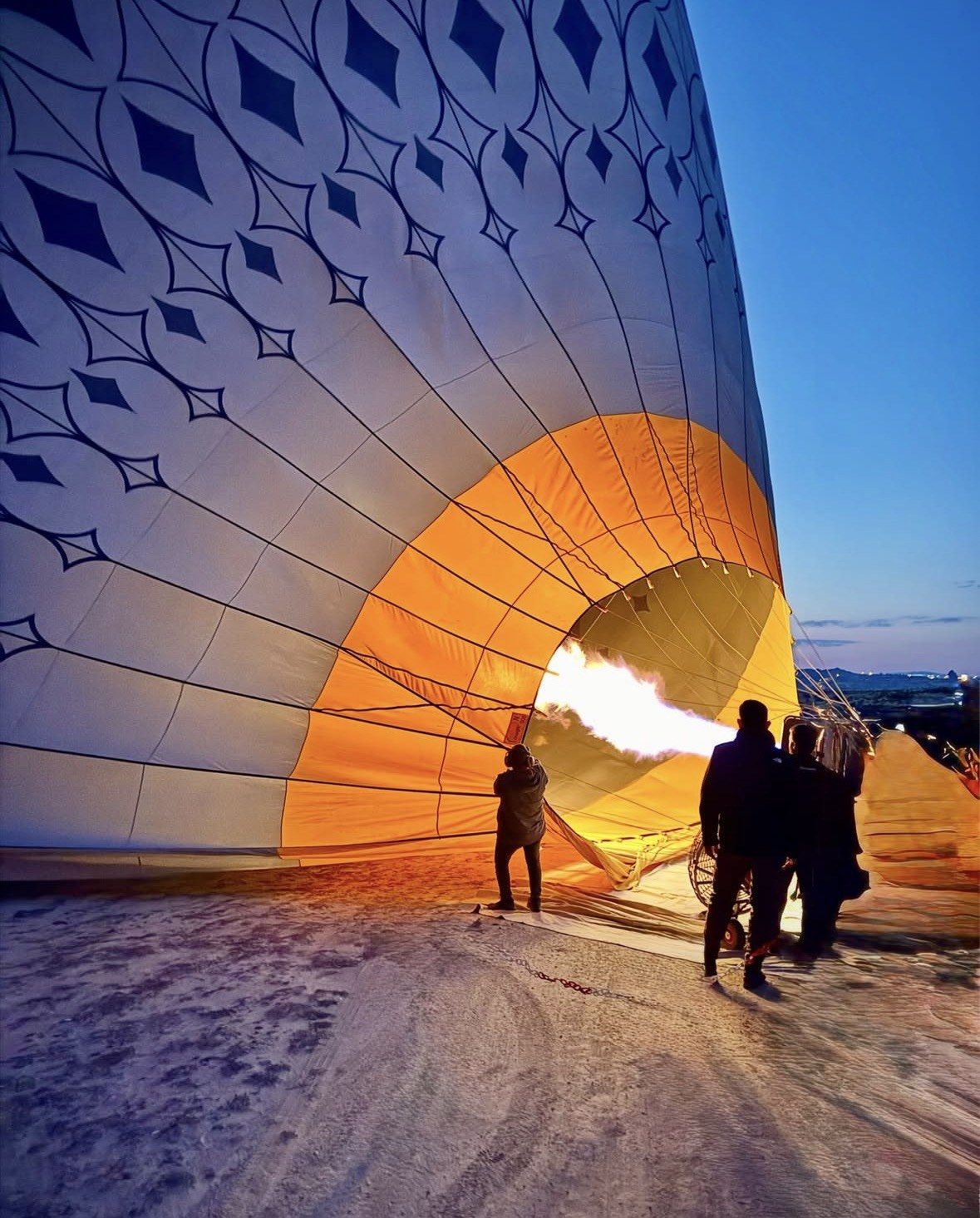
Göreme's rock-cut complex opened as a visitor site in 1967, and formal management of the wider area now sits with Kapadokya Alan Başkanlığı, the Cappadocia Area Presidency, a Ministry of Culture and Tourism body based in Nevşehir that handles protection, planning, management, promotion and inspection. Air above the valleys is governed separately and arrived much later. Slot allocation, pilot training approval and airworthiness management all run through three accredited organisations housed at Kapadokya University's hot-air-balloon research centre, which also publishes the meteorological assessments of the flight area. None of this is visible from a launch field at dawn, yet it decides whether anyone leaves the ground.
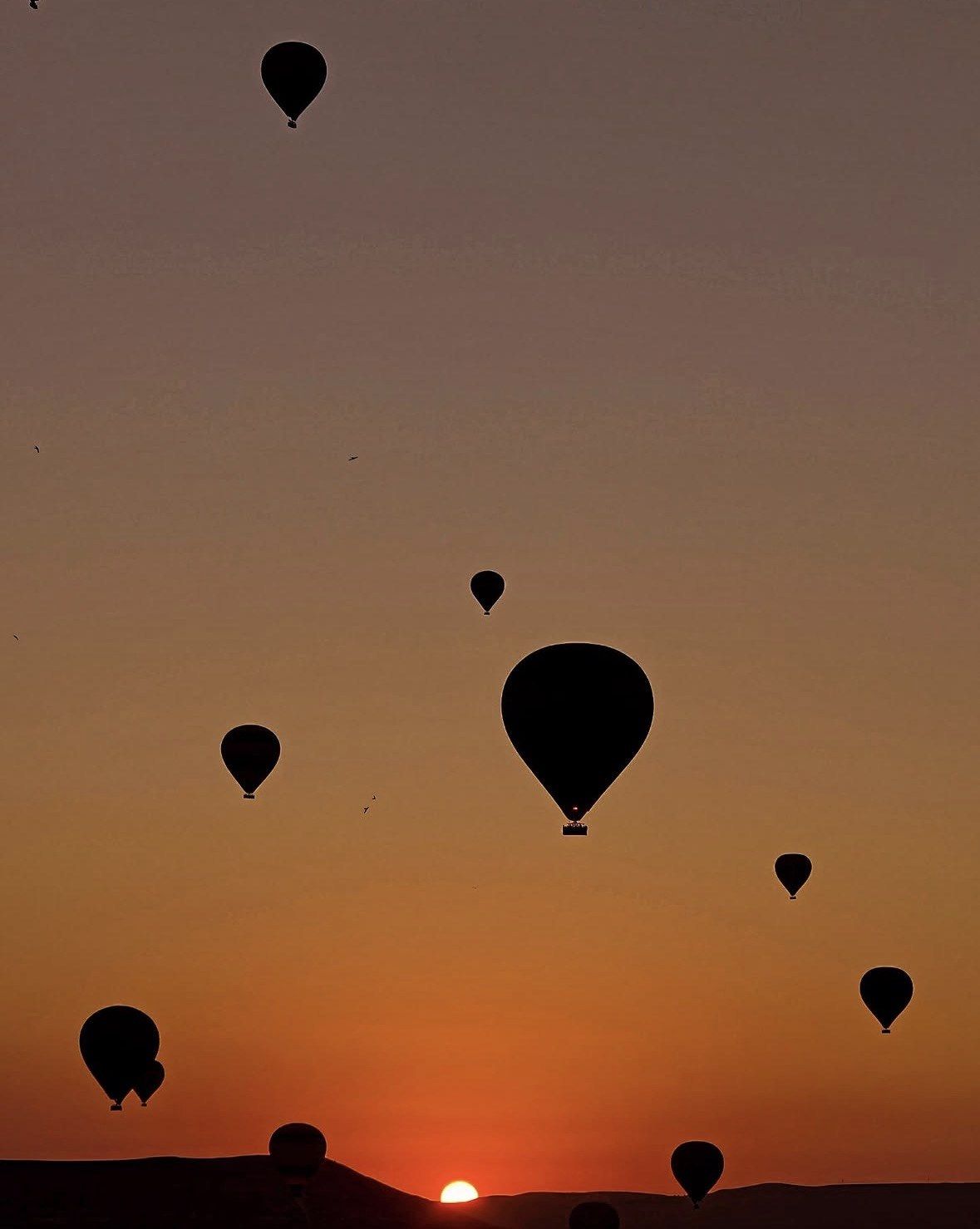
Growth has been fast and well documented. In 2018 the civil aviation authority counted 25 authorised firms flying 239 balloons in Cappadocia, up from 10 operators and 67 balloons a decade earlier, and calculated a €70 million contribution to the national economy from 30,514 flights carrying 537,500 passengers across 230 flyable days. By 2025 the region had 30 firms, 367 balloons and 585 licensed pilots, and 754,098 domestic and foreign visitors flew. On a busy morning around 156 balloons are airborne at once, which is why slot capacity was revised to 104 primary and 52 secondary balloons in the morning period and 65 at midday.
Cappadocia accounts for about 80 percent of all hot-air balloon excursions in Türkiye, and the state has built a cultural programme around that. The balloon festival runs as the Nevşehir leg of the Türkiye Kültür Yolu Festival, organised by the Ministry of Culture and Tourism; the 2026 Culture Route Festival ran from 1 to 9 August, with the 7th International Cappadocia Balloon Festival occupying three days inside it. Thirty special-shaped balloons from 10 countries lifted off in the early morning from the Göreme balloon field, among them a heart, an owl, a chick, a wolf, a parrot, an octopus and a rocket. The format is daily sunrise display flying rather than competition.
Göreme today
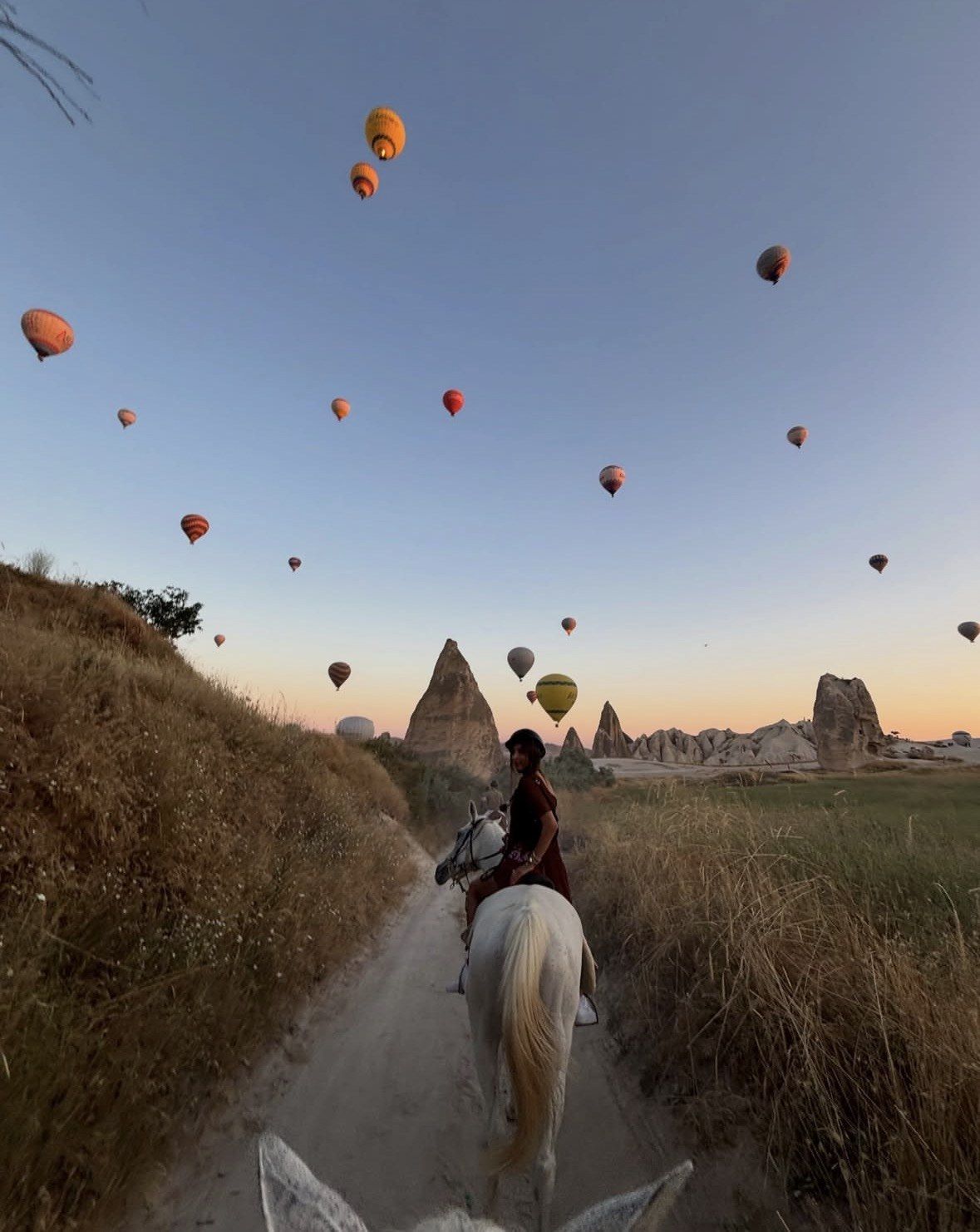
Göreme town had about 2,429 residents in 2023 according to its own municipality, a figure worth holding in mind against the crowds that pass through it. The village is small and walkable, and the open-air museum sits about 2 km east, inside a 30-minute walk of the centre. Nevşehir is 15 km west, Ürgüp 5 km east, and dolmuş minibuses link Göreme with Nevşehir, Uçhisar, Avanos, Çavuşin, Ürgüp and Ortahisar every 30 to 60 minutes, each trip taking under 30 minutes. Aşıklar Tepesi, the nearest rise for watching the balloons, lies about 200 m southeast of the centre. Rose Valley, 2 km north, needs a vehicle, a taxi or a tour.
A day in Göreme still follows the light. Morning balloon flying runs from 30 minutes before sunrise until 11:00, and sunrise over Göreme swings from about 05:15 at the June solstice to about 07:53 in late December, so your alarm is set by the date on your ticket rather than by the tour you pick. Land, then walk to the open-air museum for the 08:00 opening listed on the Ministry's own record, which also gives a 17:45 daytime closing and no weekly closing day; a seasonal listing shows 08:00 to 19:00 from 1 April to 1 October, so confirm the hours on the day. The tours on this site cover the flight, the valleys and the underground cities.